

Every year, lakhs of students begin their IIT JEE Preparation with the same dream. They want to study at one of the IITs and build a career in engineering. But after a few weeks, many students start feeling lost. Some don’t know what to study first. Some keep changing books. Others spend hours watching strategy videos instead of actually studying.
Maybe you’ve felt that too.
The truth is, clearing IIT JEE isn’t about studying all day. It’s about studying the right topics, at the right time, in the right way. I’ve seen students who studied 7–8 hours every day but didn’t improve much. I’ve also seen students who studied fewer hours but stayed consistent and solved plenty of questions. Guess who performed better?
Usually, it’s the second group. If you’re serious about your IIT JEE Preparation, this guide will help you build better habits and avoid mistakes that slow down your progress.
Let’s start from the basics.
What is IIT JEE?
The Joint Entrance Examination (JEE) is India’s national engineering entrance exam for admission to top engineering colleges. It is conducted in two stages.
- JEE Main
- JEE Advanced
JEE Main is the first step. Your score decides admission to many engineering colleges across India. If you qualify with a good rank, you become eligible for JEE Advanced. JEE Advanced is the exam required for admission to the Indian Institutes of Technology (IITs).
Both exams test your understanding of three subjects.
- Physics
- Chemistry
- Mathematics
These exams don’t just check whether you remember formulas. They check whether you understand concepts and can apply them to solve problems under time pressure. That’s why smart preparation matters more than simply reading textbooks.
Why IIT JEE Preparation Needs a Different Approach
A lot of students prepare for board exams and JEE in the same way. That usually doesn’t work. Board exams mainly test whether you’ve learned the syllabus. JEE asks whether you can use what you’ve learned. There’s a big difference.
For example, you may know every formula from a Physics chapter.
But if a question combines two concepts together, can you still solve it? That’s the real challenge.
Good IIT JEE Preparation focuses on three things.
- Strong concepts
- Regular practice
- Consistent revision
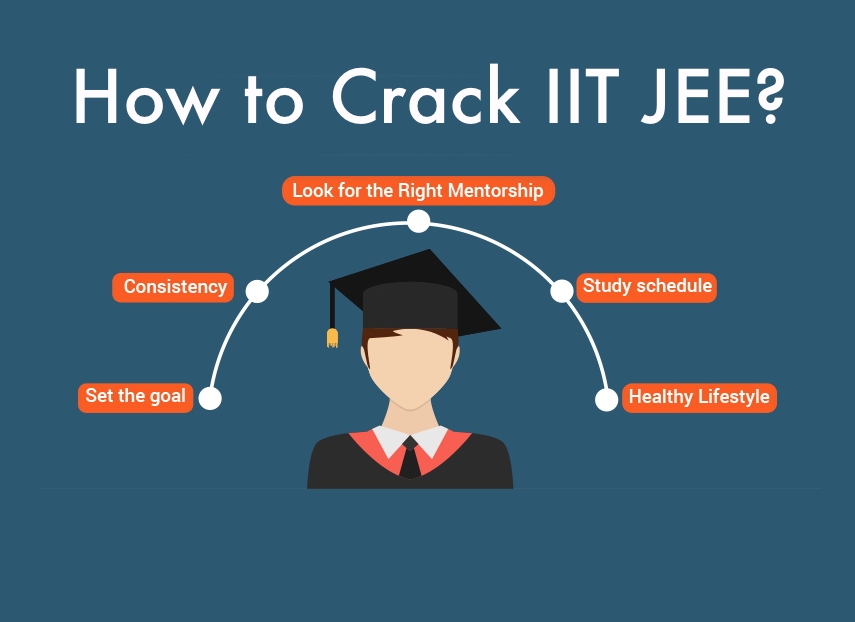
Miss any one of these, and your preparation starts becoming weak. One thing I always tell students is this. Don’t compare your beginning with someone else’s middle. Some students have been preparing since Class 8. Some start seriously in Class 11. Others begin in Class 12. Your job isn’t to catch everyone overnight. Your job is to improve a little every single day. That improvement adds up.
Tip 1: Build Strong Concepts Before Solving Hundreds of Questions
Many students think solving more questions automatically means better preparation. Not always. Imagine trying to build a house without a solid foundation. It won’t last. The same thing happens during IIT JEE Preparation. Start by understanding the chapter. Read your NCERT textbook carefully. Then move to coaching notes or reference books.
Ask yourself simple questions.
- Why does this formula work?
- Where is this concept used?
- Can I explain it without looking at my notes?
If you can’t explain a topic in simple words, you probably haven’t understood it fully yet. Take your time. Strong concepts make difficult questions feel much easier later.
Tip 2: Create a Study Plan That You Can Actually Follow
Many students make beautiful study timetables. Colorful charts. Perfect schedules. Then they stop following them after three days. A simple timetable works much better. Try dividing your day into focused study blocks.
For example:
- Physics – 2 hours
- Chemistry – 2 hours
- Mathematics – 2 hours
- Revision – 1 hour
- Question practice – 1 hour
Keep one day every week for revision. Don’t keep learning new chapters every single day. Your brain also needs time to remember what you’ve already studied. A timetable isn’t meant to impress anyone. It’s meant to help you stay consistent. Even studying six focused hours every day is better than studying twelve distracted hours once in a while. Consistency wins more often than motivation.
Tip 3: Practice Questions Every Single Day
Reading theory feels productive. But solving questions is where real learning happens. You don’t need to solve 300 questions every day. Even 40 to 60 good-quality questions can make a difference if you understand every solution. When you get a question wrong, don’t just check the answer and move on. Pause for a minute.
Ask yourself:
- Why did I make this mistake?
- Did I forget a concept?
- Was it a calculation error?
- Did I rush?
This habit helps you improve much faster. Keep a notebook just for mistakes. Write down tricky questions, formulas you forget, and concepts that confuse you. Before every mock test, revise this notebook. You’ll notice that many of your repeated mistakes slowly disappear.
Tip 4: Revise More Than You Learn
One of the biggest mistakes during IIT JEE Preparation is learning new chapters every day without revising old ones. It feels like you’re making progress. But after a month, you realize you’ve forgotten half of what you studied. Revision fixes that. A simple revision plan works well.
- Revise today’s topics before sleeping.
- Revise them again after one week.
- Revise them once more after one month.
This repeated revision helps your brain remember concepts for a much longer time. Some students keep making new notes again and again. You don’t need five notebooks for one chapter. One clear notebook is enough. Keep adding important points whenever you learn something new. Over time, it becomes your personal revision guide.
Tip 5: Mock Tests Are Your Best Teacher
Many students avoid mock tests because they’re afraid of getting low marks. That fear is normal. But avoiding tests doesn’t solve anything. Mock tests show where you stand today. That’s valuable information. Treat every mock test like the actual exam.
- Sit in a quiet room.
- Keep a timer.
- Don’t pause the test.
- Avoid checking your phone.
After finishing the paper, spend more time analyzing it than writing it. Look for patterns. Maybe you’re losing marks in Physics because of silly calculations. Maybe Organic Chemistry is taking too much time. Maybe you’re attempting difficult Mathematics questions too early. Once you know the problem, you can fix it. Many rankers say their scores improved because they analyzed every mock test carefully. Not because they simply wrote more tests.
Tip 6: Don’t Collect Too Many Books
This happens every year. Someone recommends a book on YouTube. Another teacher suggests something different. A friend says another book is better. Soon your study table is full. Your preparation isn’t. Too many books often create confusion. Finish one good book before buying another. For most students, these resources are enough.
Physics
- NCERT
- HC Verma
- Coaching material
Chemistry
- NCERT
- Coaching notes
- Previous Year Questions
Mathematics
- NCERT
- RD Sharma for basics
- Coaching material
- Previous Year Questions
The goal isn’t to own every famous book. The goal is to master the books you already have. Quality beats quantity every time.
Tip 7: Learn to Manage Your Time During the Exam
Many students know the answers. They just don’t finish the paper. That’s frustrating. Time management starts long before exam day. During mock tests, practice deciding which questions to attempt first. Some students begin with Chemistry because they finish it quickly. Others prefer Mathematics first.
Find what works for you.
Don’t copy someone else’s strategy without testing it. If a question takes too long, leave it. Come back later. One difficult question should never cost you five easy ones. Keep moving through the paper. Momentum matters.
Build a Daily Routine That You Can Maintain
Your routine doesn’t need to look perfect. It just needs to be realistic. Here’s an example.
Morning
- Revise yesterday’s topics.
- Study one difficult subject while your mind is fresh.
Afternoon
- Solve practice questions.
- Review mistakes.
Evening
- Study another subject.
- Solve previous year questions.
Night
- Revise formulas.
- Read short notes.
- Plan tomorrow’s targets.
Don’t forget short breaks. Studying continuously for six hours usually reduces focus. A five or ten-minute break after every study session can help you stay fresh.
Previous Year Papers Are More Valuable Than You Think
If you’re serious about IIT JEE Preparation, don’t ignore previous year papers. They tell you a lot.
You’ll understand:
- Frequently asked concepts
- Difficulty level
- Question patterns
- Time management
Try solving papers without looking at solutions. Even if your score is low, keep going. Each paper teaches something new. Many students wait until the last month to solve previous year papers. Start much earlier. You’ll become familiar with the exam pattern and feel more confident.
Tip 8: Take Care of Your Health
When youre preparing for IIT JEE, it’s easy to think that studying all day is the only way to succeed. It isn’t. If you’re tired, sleepy, or stressed, your brain won’t perform at its best. Try to get at least 7 to 8 hours of sleep every night. Eat simple, healthy meals. Drink enough water during the day. A short walk or 20–30 minutes of exercise can also help clear your mind. It doesn’t waste time. In fact, many students find they concentrate better afterward. Don’t ignore your mental health either. Some days won’t go as planned. You might score poorly in a mock test or struggle with a chapter. That’s normal. One bad day doesn’t decide your result. Focus on getting back on track the next day.
Tip 9: Learn From Your Mistakes
Mistakes are part of every student’s journey. The difference is what you do after making them. After every mock test or practice session, spend time reviewing your errors.
Ask yourself:
- Was it a concept mistake?
- Did I rush the calculation?
- Did I misunderstand the question?
- Was I careless?
Keep a separate “mistake notebook.”
Write down:
- Important formulas you forget
- Tricky concepts
- Frequently repeated errors
- Questions that taught you something new
Before each mock test, revise this notebook.
You’ll be surprised how much it helps.
Tip 10: Stay Consistent Until Exam Day
Most students begin their IIT JEE Preparation with a lot of excitement. The real challenge comes after a few months. Motivation goes up and down. That’s completely normal. Instead of waiting to “feel motivated,” focus on building a routine. Study even when you don’t feel like it. Some days you’ll finish everything on your schedule. Some days you won’t. Don’t let one unproductive day turn into an unproductive week. Small, consistent efforts always beat occasional long study sessions.
Common Mistakes During IIT JEE Preparation
Many students lose marks because of avoidable mistakes.
Try to stay away from these habits.
- Ignoring NCERT, especially for Chemistry
- Buying too many reference books
- Skipping revision
- Avoiding mock tests because of low scores
- Comparing yourself with friends every day
- Studying without solving questions
- Not analyzing mistakes after tests
- Following random study strategies from social media
- Leaving difficult chapters until the last month
- Sleeping too little before exams
Even fixing two or three of these habits can improve your preparation.
Best Books for IIT JEE Preparation
Choosing the right books saves both time and effort.
Physics
- NCERT Physics
- Concepts of Physics by H.C. Verma
- Coaching study material
- Previous Year Question Papers
Chemistry
- NCERT Chemistry
- Coaching notes
- Previous Year Questions
Mathematics
- NCERT Mathematics
- RD Sharma for basic concepts
- Coaching material
- Previous Year Question Papers
Don’t rush to complete every book available. It’s better to revise one book three times than read five books once.
A Simple Weekly Revision Plan
You don’t need a complicated schedule. Try something like this.
Monday to Friday
- Study new topics
- Revise yesterday’s chapter for 20–30 minutes
Saturday
- Revise everything studied during the week
- Solve mixed practice questions
Sunday
- Take one full mock test
- Analyze your mistakes
- Plan the next week’s goals
This routine helps you remember concepts for a longer time.
Last 30 Days Before IIT JEE
The final month is all about revision. Avoid starting completely new topics unless they’re very important.
Instead, focus on:
- Revising formulas every day
- Solving previous year papers
- Taking full-length mock tests
- Reviewing your mistake notebook
- Improving speed and accuracy
Don’t panic if your mock scores go up and down. Many students see fluctuations. Focus on learning from each paper instead of worrying about one score.
Frequently Asked Questions
How many hours should I study for IIT JEE Preparation?
Quality matters more than the number of hours. Many successful students study 6 to 8 focused hours daily along with regular revision and question practice.
Is NCERT enough for IIT JEE?
NCERT is essential, especially for Chemistry. For Physics and Mathematics, combine NCERT with good practice books and previous year questions.
When should I start IIT JEE Preparation?
Starting in Class 11 gives you enough time to build concepts. If you’re in Class 12, don’t worry. Many students have cleared IIT JEE with one year of focused preparation.
Are mock tests really important?
Yes. Mock tests help improve speed, accuracy, confidence, and time management. Analyzing each test is just as important as taking it.
Can an average student crack IIT JEE?
Yes. Many students with average school marks have earned good JEE ranks through consistent study, regular revision, and disciplined practice.
Final Thoughts
Cracking IIT JEE isn’t about finding a secret shortcut because, honestly, there isn’t one. Every year, thousands of students begin their preparation with the same goal, but the ones who succeed are usually the ones who stay consistent. They don’t rely on last-minute studying or spend all their time looking for the “perfect” strategy. Instead, they focus on understanding concepts, solving questions regularly, and learning from every mistake they make.
There will be days when studying feels easy and days when nothing seems to go your way. You might score poorly in a mock test or struggle with a chapter that everyone else seems to understand. That’s completely normal. One bad test or one difficult week doesn’t decide your final result. What matters is getting back to your books the next day and continuing your preparation.
If you’re starting your IIT JEE Preparation today, don’t put pressure on yourself to finish everything at once. Take one chapter at a time. Understand the concepts properly. Practice enough questions to build confidence. Revise what you’ve learned before moving ahead. These small habits may not seem like much today, but they make a huge difference over the months.
Remember, IIT JEE is not just a test of knowledge. It also checks your patience, discipline, and consistency. Students who keep showing up every day, even when they don’t feel motivated, often make the biggest progress.
Stay focused on your own journey instead of comparing yourself with others. Keep improving a little every day, trust the process, and believe in your effort. A year from now, those small daily study sessions can turn into a strong score, a great rank, and maybe even your dream seat at an IIT.
Your dream doesn’t become reality in a single day. It grows with every chapter you complete, every question you solve, and every mistake you learn from. Keep going. Your future self will thank you for the effort you put in today.

